
Advocacy
The American Academy of Sleep Medicine (AASM) advocates on legislative and regulatory issues impacting the sleep medicine subspecialty. The AASM works directly with members of Congress, state legislators, the Centers for Medicare & Medicaid Services (CMS), the National Institutes of Health (NIH), and other state and federal agencies on issues of importance to the sleep medicine field.








Advocacy News
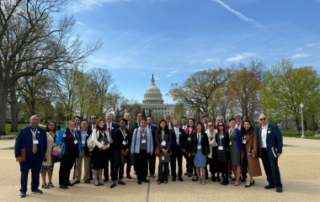
Members advocate for the sleep field during largest AASM Hill Day
On April 10, AASM members converged on Capitol Hill for the largest Hill Day ever held by the AASM. More [...]

AASM to exhibit at APHA 2023
Come see us at the American Public Health Association’s (APHA) Annual Meeting and Expo. We will have two booths at [...]
AASM continues physician payment reform efforts
The American Academy of Sleep Medicine (AASM) continues to work to advocate for changes to Medicare physician payment through an [...]